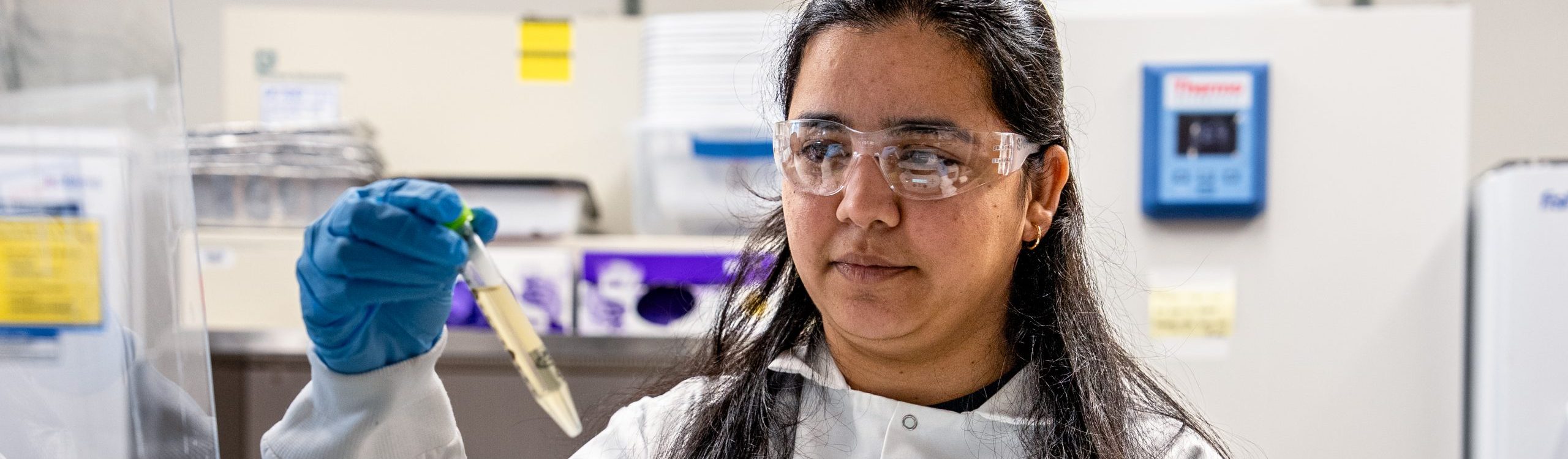
Research at the Upadhyah Lab
The overall aim of our current research program is to develop effective intervention strategies for controlling foodborne pathogens by characterizing their pathophysiology and interactions with the environment and the host. Built on the principle of “farm-to-fork” food safety, my research program focuses on four broad areas, namely (I) Reducing pathogen colonization in food animals (II) Controlling the persistence of foodborne pathogens in proccessing environment (III) Inactivation of foodborne pathogens in high-risk food products and (IV) Developing anti-virulence strategies to control foodborne pathogens in humans.
Goals
(I) Reducing pathogen colonization in food animals: The first step for reducing contamination of food products is to reduce pathogen colonization of food animals. I am developing novel carrier systems (encapsulation, nanoparticles) for phytochemicals and probiotics and testing their efficacy for controlling Salmonella and Campylobacter jejuni in layer and broiler chickens. In addition, I am investigating the efficacy of aforementioned approaches in improving the intestinal microbiome, performance, meat and egg quality, consumer acceptability, and overall health in birds.
(II) Controlling the persistence of foodborne pathogens in processing environment: The persistence of foodborne pathogen in the processing environment is a significant food safety hazard. I have discovered that several phytochemicals and ozone nanobubbles reduce the persistence of foodborne pathogens by modulating the expression of attachment proteins, biofilm-associated genes, and quorum sensing. I am currently investigating the efficacy of phytochemical nanoemulsions, and ozone nanobubbles for reducing the persistence of foodborne pathogens in the processing environment. The long-term goal of this project would be to develop a natural disinfectant (with potential patent opportunity) in the form of spray, gels, or foams for controlling processing plant contamination.
(III) Inactivation of foodborne pathogens in high-risk meat products and produce: Effective control of pathogens in food products continues to be a challenge for the industry. I am investigating the efficacy of phytochemical nanoemulsions and ozone nanobubbles, in combination with other interventions (e.g., modified atmosphere packaging, high pressure processing, heat) for reducing pathogens in meat products, eggs and fresh produce.
(IV) Developing anti-virulence strategies to control foodborne pathogens in humans: Anti-virulence strategies that interfere with bacterial signaling and virulence expression could lead to a reduction in infection without developing resistant strains. I am currently investigating the effects of novel compounds on virulence attributes of foodborne pathogens, identifying structure activity relationships, and implementing the findings to develop effective control strategies in appropriate mammalian models.
Additional prospects
Improving Poultry health: In addition to the research lines described above, I am developing a new research area aimed at improving poultry health. I will primarily focus on the use of phytochemical nanoemulsions and nanobubbles for improving poultry health and mitigating disease.
Our long-term mission is to support the food industry through a two-pronged approach of improving animal health and food product safety.